Goodyear, AZ · Hard Water Treatment · West Valley
Water Softener Installation & Repair in Goodyear, AZ
Goodyear's four water utilities deliver 250 to 400 ppm hard water across every neighborhood. Whole-home softener installation, repair, and service for Palm Valley, Estrella Mountain Ranch, and PebbleCreek.
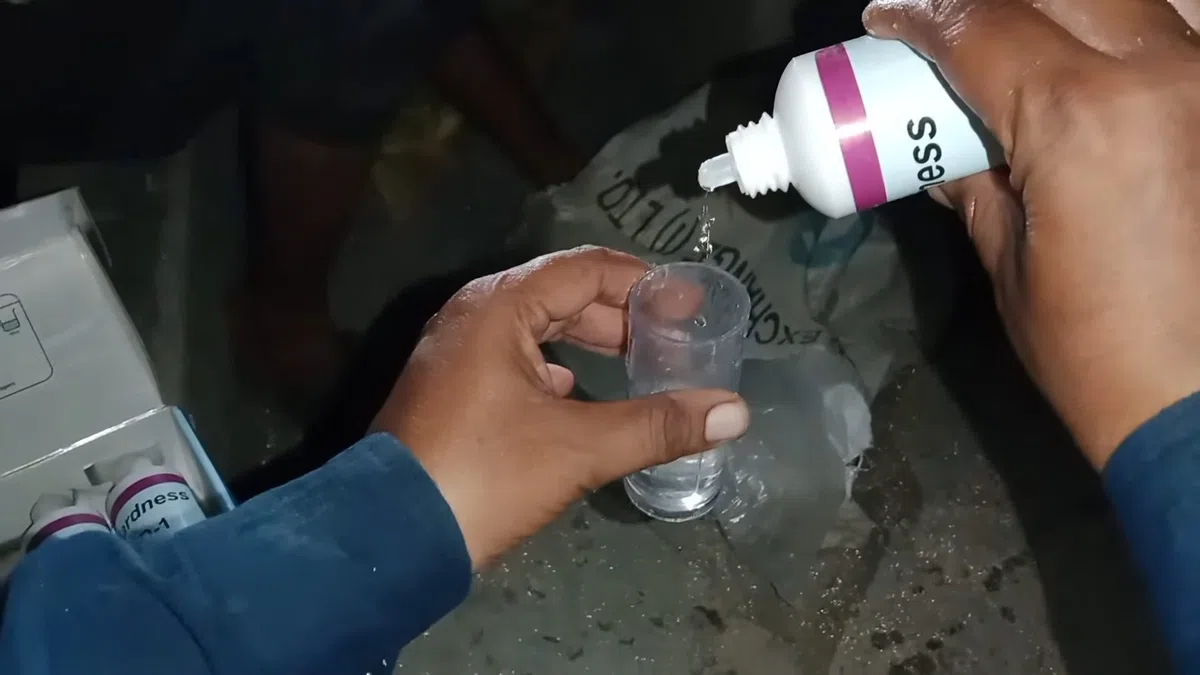
Why Goodyear homes need water softeners
Hard water is the most consistent plumbing problem in Goodyear and the broader West Valley. All four of Goodyear's water providers — City of Goodyear, EPCOR Water Arizona, Liberty Utilities, and Global Water Resources — draw from a mix of Colorado River water delivered through the Central Arizona Project and local groundwater wells. Both sources carry significant calcium and magnesium. When that water moves through a home, it deposits minerals on heating elements, inside pipes, on fixture surfaces, and throughout every appliance that uses water.
The practical effects accumulate quickly. Water heater sediment builds up faster than the tank was designed to handle, cutting efficiency and shortening service life by years. Washing machine drum seals, dishwasher components, and shower cartridges all show accelerated wear. Fixtures and glass develop scale that resists ordinary cleaning. A whole-home ion-exchange softener removes calcium and magnesium before the water reaches any of these points, addressing the problem at the source rather than managing its symptoms one appliance at a time.
Goodyear homeowners without softeners typically replace water heaters every 6 to 8 years. With a softener and annual sediment flushes, that same heater often reaches 12 years or more. The softener cost pays back in extended appliance life before the first salt refill.
Water softener installation for Goodyear homes
Sizing and system selection
Correct sizing depends on the number of occupants, daily water usage, and the incoming hardness reading from your specific utility. Goodyear's hardness varies slightly between the City of Goodyear service area south of I-10, the EPCOR coverage zone covering most of Palm Valley, and the Global Water Resources area in Estrella Mountain Ranch. We test hardness at the tap before recommending a system. Most Goodyear households in the three to five person range require a 32,000 to 48,000 grain capacity system. Larger homes or high-usage households may need 64,000 grains or a twin-tank configuration that maintains continuous soft water during regeneration.
Pairing with a reverse osmosis system
A water softener removes hardness ions but does not reduce total dissolved solids or address taste. An under-sink reverse osmosis system at the kitchen sink adds a final filtration stage that brings drinking and cooking water to very low TDS levels. Most Palm Valley and Estrella Mountain Ranch homeowners who install a whole-home softener also install an RO system. The RO membrane lasts significantly longer on softened water, making the pairing cost-effective over the membrane's service life.
Softener repair and maintenance
Salt bridging, resin fouling, injector clogging, and control valve failures are the most common softener repair issues in Goodyear homes. Salt bridging occurs when salt in the brine tank forms a hard crust above the water level, preventing proper regeneration — this happens more often in Goodyear's dry climate than in humid regions. We diagnose and clear bridges, replace fouled resin, service control valves, and handle all brands including Kinetico, Fleck, Clack, EcoWater, and others. Annual output hardness testing and brine valve inspection keeps systems running at design efficiency.
Soft water loops and bypass considerations
Many Goodyear homes built after the mid-1990s were plumbed with a soft water loop: a pre-installed bypass that allows a softener to be connected without rerouting pipes. Homes without a loop require a loop installation or alternative plumbing work before the softener can be connected. We identify whether your home has a loop during the estimate visit. We also ensure outdoor hose bibs and irrigation are bypassed from the softened water circuit, which protects both the soil structure and the softener's salt consumption rate.
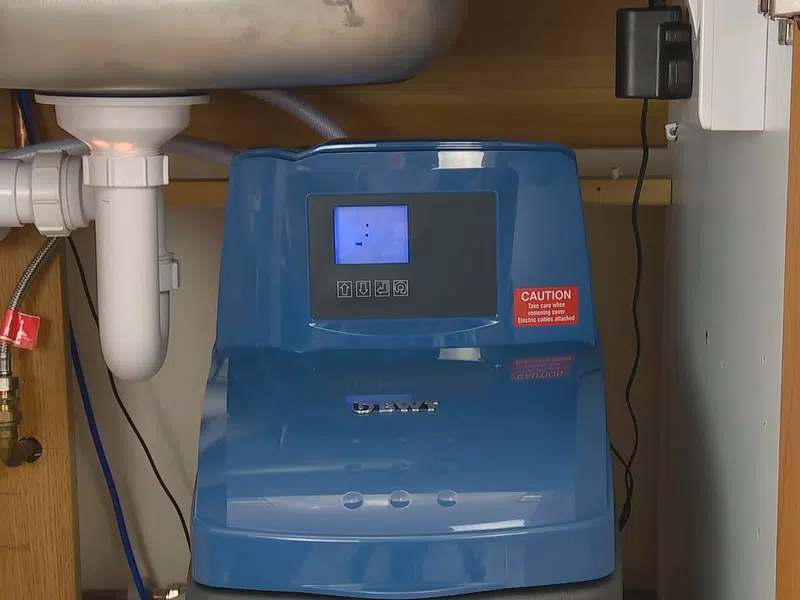
Signs your Goodyear home needs a water softener
White scale on showerheads, faucet aerators, and glass shower doors is the most visible sign. If scale returns within days of cleaning, the incoming water is hard enough that cleaning alone will not keep pace with mineral deposition.
A water heater that runs less efficiently, makes popping or rumbling sounds during heating, or needs more energy to maintain temperature indicates sediment accumulation at the tank bottom. Hard water sediment forms a layer that insulates the water from the heating element or burner. See our water heater repair page for more on sediment-related failures.
Shorter cartridge life in kitchen and bathroom faucets, spots on dishes fresh from the dishwasher, and clothing that feels stiff after washing are all household indicators. In PebbleCreek and Palm Valley homes with water filtration systems but no softeners, filter membranes also foul faster from hardness than they would with a pre-softener in the system.
Water softener service areas in the West Valley
We install and service water softeners in all Goodyear neighborhoods, including Palm Valley, Estrella Mountain Ranch, PebbleCreek, Centerra, and Downtown Goodyear. Adjacent West Valley cities in our service area include Avondale, Litchfield Park, Surprise, Buckeye, and Glendale. All of these communities share Goodyear's hard water profile and benefit from the same softener solutions.
Water softener questions
Which type of water softener works best for Goodyear water?
For most Goodyear households, a demand-initiated ion-exchange softener is the right choice. These systems regenerate based on actual water use rather than a timer, which suits Goodyear's variable usage patterns, including seasonal snowbird households in PebbleCreek. Twin-tank systems make sense for larger households or homes where continuous soft water availability is important.
Do I need a water softener if I already have a whole-house filter?
Whole-house filters address sediment, chlorine, and specific contaminants but do not remove hardness minerals. A softener targets calcium and magnesium through ion exchange. The two systems address different problems and often work together: a sediment pre-filter before a softener protects the resin from fouling, extending its service life.
Can I install a water softener myself in a Goodyear home?
Many homeowners do, but correct installation requires locating and using the soft water loop if your home has one, bypassing the line to exterior hose bibs and irrigation (outdoor water should not be softened), setting the correct hardness value for your specific utility, and programming the regeneration cycle correctly. Installation errors account for a meaningful share of the softener repair calls we receive.
How often does a water softener need salt?
A typical Goodyear household uses 40 to 80 pounds of salt per month, depending on household size, water usage, and system capacity. Demand-initiated systems use salt more efficiently than timer-based systems. Check the salt level monthly and avoid letting the tank run dry, which can cause resin fouling that requires professional cleaning.
Does a water softener affect my pool or irrigation water?
Softened water should not feed outdoor irrigation or pools. Softening irrigation water wastes salt and can affect soil structure over time. We bypass outdoor hose bibs and irrigation lines from the softener circuit during every installation. Pool water is managed with its own chemistry program independent of the home's water treatment system.
Get a free water softener estimate in Goodyear
We test your water hardness and recommend the right system for your home and utility. No pressure, just an honest estimate.
(623) 323-3182 — Call Now