Goodyear, AZ · 1990s–2020s Construction · West Valley
Slab Leak Detection & Repair in Goodyear, AZ
Copper supply lines under Goodyear's 1990s to 2020s slab-on-grade foundations are now entering their primary failure window. Acoustic, thermal, and electronic detection before any concrete is cut.
Why slab leaks are common in Goodyear's housing stock
Hard water corrosion and Goodyear's slab leak timeline
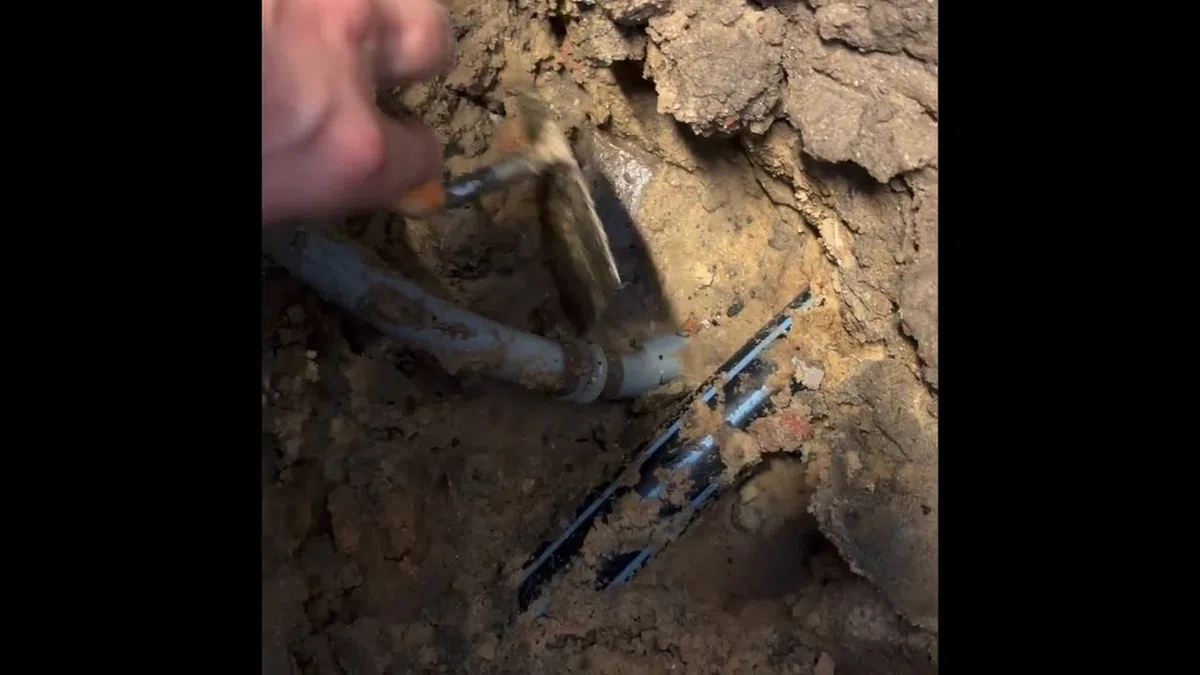
Goodyear's established master-planned communities — Palm Valley, Estrella Mountain Ranch, PebbleCreek, and Centerra — were built primarily between the mid-1990s and the early 2010s. The standard construction method was slab-on-grade: a concrete slab poured directly on the ground, with copper water supply lines running underneath. Those homes are now 15 to 35 years old. Two forces simultaneously attack that copper: very hard water at 250 to 400 ppm corrodes the pipe interior through electrochemical action, and the West Valley's alluvial soil shifts through monsoon saturation and dry-season shrinkage, applying mechanical stress from outside.
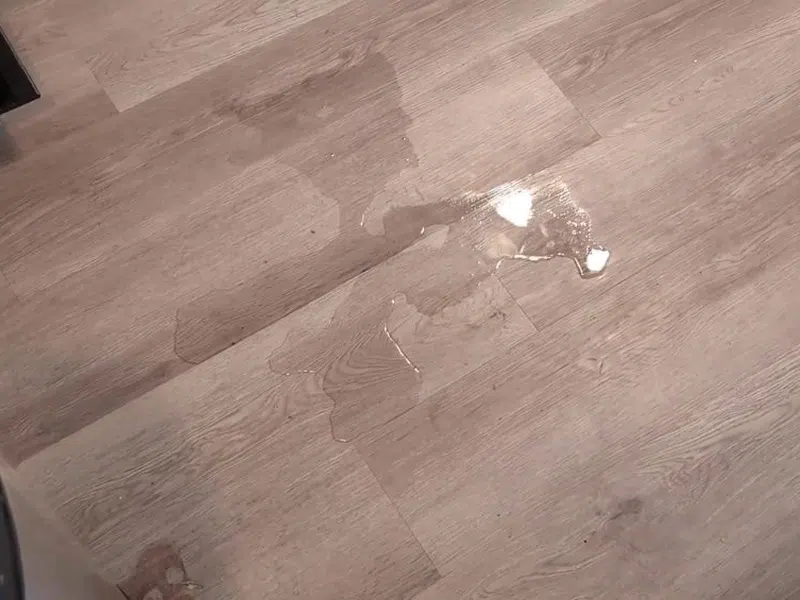
A slab leak typically begins as a pinhole — a tiny perforation that allows a slow seep under the slab. Caught early, it is a manageable repair with several options. Left unaddressed, the leak saturates the subgrade, can affect floor coverings, and in extended cases may undermine the slab surface. The sooner detection happens, the more repair paths remain available and the less damage accumulates in the meantime.
The caliche layer present in much of the West Valley's soil adds a complication. Caliche is a hardpan calcium carbonate deposit that occurs at varying depths below the surface. When concrete cutting is required for point repair, caliche can significantly increase the time and cost of excavation. Non-invasive detection that narrows the leak location precisely matters more in Goodyear than in softer-soil markets.
Slab leak detection methods we use in Goodyear
Acoustic leak detection
Acoustic listening equipment amplifies the sound of pressurized water escaping from a pinhole under the slab. By moving the sensor across the floor surface and comparing readings at multiple points, we triangulate the point of maximum sound intensity. Acoustic detection works best on hot or cold supply lines under constant pressure, where escaping water produces a consistent sound signature. The tile and stone floors common in Palm Valley and PebbleCreek master-planned homes transmit sound well and aid this method.
Thermal imaging
Pressurized hot water escaping under the slab warms the surrounding concrete as it moves laterally from the leak point. Thermal cameras detect the resulting temperature differential at the floor surface. A warm area on an otherwise uniform temperature floor profile identifies the probable leak zone. Thermal imaging is most effective on hot water line leaks, which create a distinct temperature signature. Cold water leaks in summer, when floor temperatures are elevated overall, are better confirmed with acoustic or electronic methods.
Electronic leak detection
Electronic correlators compare pressure readings from two points on the same pipe and calculate the leak location mathematically. This method is used when acoustic and thermal detection produce ambiguous results or when pipe configuration makes direct acoustic listening difficult. We use electronic detection as a confirmation step in complex cases, particularly when we need to distinguish a single isolated leak from multiple pinholes along the same run, since that distinction directly affects which repair method makes sense.
Pressure isolation testing
Before deploying listening or imaging equipment, we perform pressure isolation testing to confirm that a leak exists on the system and to determine whether it is on the hot side, cold side, or both. This narrows the field before the more detailed detection work begins, making the overall process faster and more targeted. If the pressure test shows no leak on either side, we investigate other potential water sources before proceeding.
Slab leak repair options for Goodyear homes
After precise detection, three main repair paths apply depending on the pipe condition, the configuration, and the homeowner's situation.
Point repair cuts a limited opening in the concrete slab at the confirmed leak location, accesses the pipe, and replaces the damaged section. It works well when detection confirms a single isolated leak in a pipe that is otherwise in good condition. For older copper in homes from the early 1990s, however, a single pinhole failure often signals broader deterioration, and a point repair may not be the long-term answer.
Pipe rerouting relocates the supply line out from under the slab entirely, running the pipe through interior walls, the attic, or along the exterior. This requires no concrete work and removes the corroded pipe from service permanently. Rerouting is frequently the right choice when multiple pinholes have occurred, when the pipe age and material suggest broader deterioration, or when caliche in the soil makes concrete work expensive. See our repiping service if widespread copper failure is present throughout the home.
Epoxy pipe lining coats the interior of the existing pipe with a structural epoxy resin, sealing current pinholes and creating a smooth new interior surface. It is a trenchless approach that preserves the existing pipe route without concrete demolition. Goodyear conditions — hard water and soil movement — make epoxy lining an attractive option when the pipe walls retain sufficient structural integrity to support the lining process.
Slab leak detection service areas in Goodyear and the West Valley
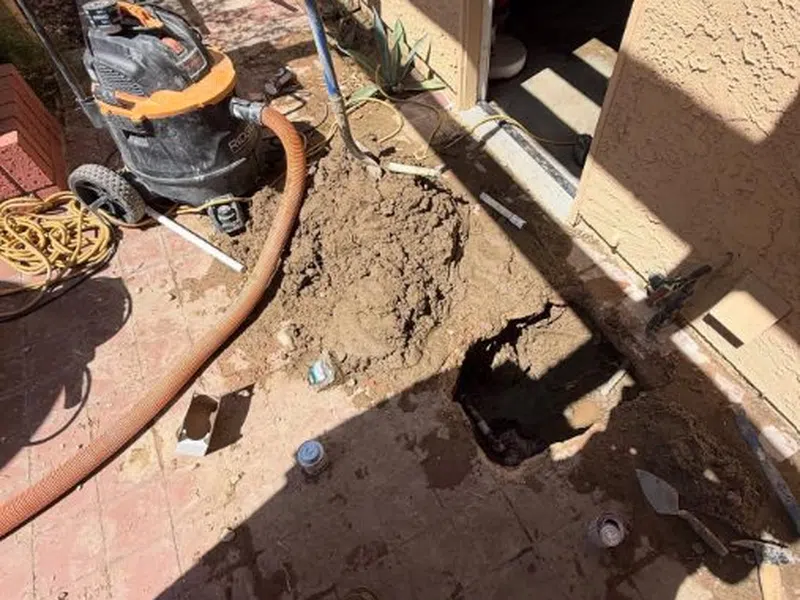
We provide slab leak detection and repair in all Goodyear communities, including Palm Valley, Estrella Mountain Ranch, PebbleCreek, Centerra, and the Goodyear Ballpark area. We also serve Avondale, Litchfield Park, Surprise, and Buckeye, all of which share Goodyear's slab-on-grade construction profile and hard water conditions.
Slab leak questions
How can I tell if I have a slab leak without calling a plumber?
Several signs suggest a slab leak without requiring detection equipment. A floor section that feels warm when no hot water has run recently, the sound of running water inside the slab when all fixtures are off, an unexplained water bill increase, or moisture visible at baseboard level. A water meter test provides more certainty: shut off all water inside and outside, then watch the meter for 30 minutes. If it moves, there is an active leak somewhere in the system.
How much does slab leak detection cost in Goodyear?
Detection cost depends on the number of methods required and the pipe layout complexity. We provide an estimate before detection begins. Straightforward cases with a single suspected leak area take less time and equipment than cases involving multiple potential leak points or unusual pipe routing.
Will my homeowner's insurance cover slab leak repair in Arizona?
Coverage varies by policy. Most homeowner policies cover the cost of accessing the leak, meaning concrete cutting and restoration, but not the pipe repair itself. Some policies exclude water damage from slow leaks that could have been detected earlier. Contact your carrier before we begin to understand your specific coverage.
Is my foundation at risk from a slab leak?
A prolonged undetected slab leak can saturate subgrade soil and potentially affect the slab. In most Goodyear cases, leaks are detected before reaching that stage. A leak running for weeks or months without detection has a higher chance of causing subgrade problems. Early detection, which is why calling at the first sign matters, limits the structural risk significantly.
Can a slab leak be repaired without breaking concrete?
In some cases, yes. Pipe rerouting runs the supply line above grade through walls or the attic, eliminating the at-slab pipe without any concrete demolition. Epoxy pipe lining seals existing pinholes from within without opening the slab. Whether these options fit depends on the pipe configuration, the extent of damage, and the access available. We assess each situation before recommending a method.
Schedule slab leak detection in Goodyear
Licensed acoustic, thermal, and electronic detection across Goodyear and the West Valley. We locate before we cut.
(623) 323-3182 — Call Now