Goodyear, AZ · Hard Water Sediment · West Valley
Water Heater Repair in Goodyear, AZ
Goodyear's 250 to 400 ppm hard water cuts tank water heater life from 12 years to 6 or 7. Licensed water heater repair across the West Valley: sediment flush, anode rod, T&P valve, thermostat, and more.
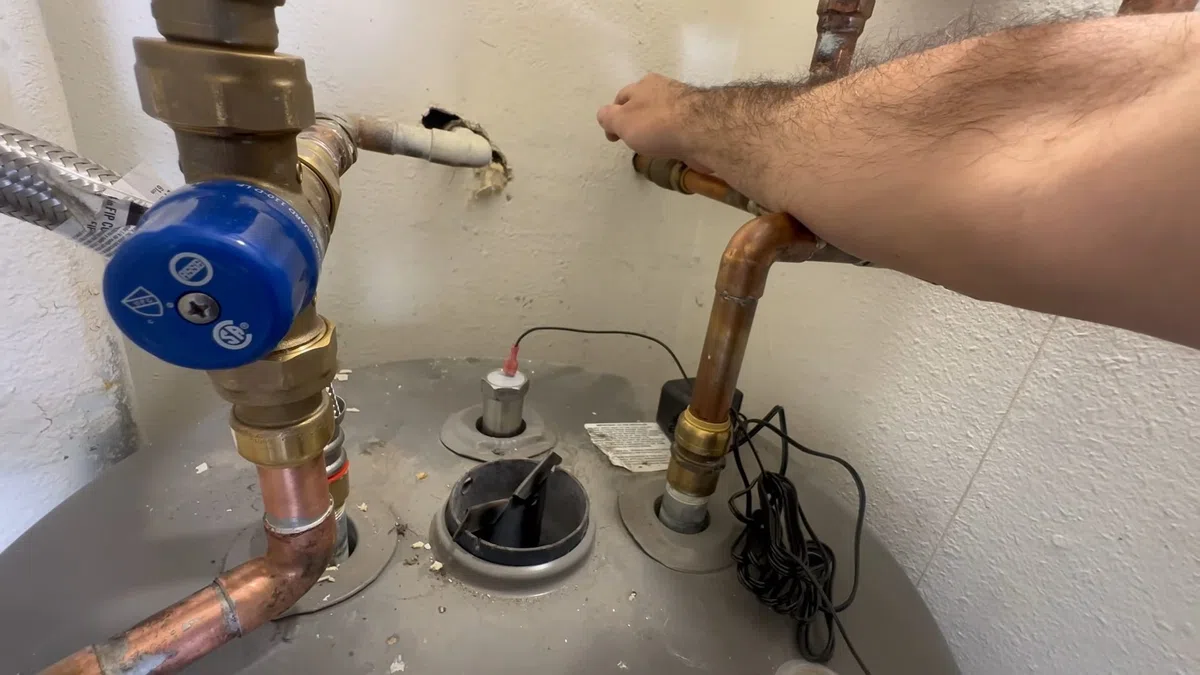
Why water heaters fail faster in Goodyear than in most of the country
How hard water accelerates water heater failure in Goodyear
The standard tank water heater is rated for 10 to 12 years of service life under normal conditions. In Goodyear, normal conditions don't apply. All four of the city's water utilities deliver water in the 250 to 400 ppm hardness range. As that water is repeatedly heated in the tank, calcium and magnesium minerals fall out of solution and settle as sediment at the tank bottom. The sediment layer insulates the water from the heating element or burner, reducing efficiency and forcing the unit to run longer to maintain temperature. Over time, sediment can also crack the glass tank lining, ending the heater's service life entirely.
We see water heaters in Goodyear develop sediment-related problems in 5 to 7 years that homeowners in softer-water markets don't encounter until year 10 or 11. Annual sediment flushing extends tank life significantly. Pairing a tank heater with a whole-home water softener reduces sediment formation at the source and is the most effective long-term protection for water heating equipment in this market.
Water heater repair services for Goodyear homes
Sediment flush and descaling
Sediment flushing drains the tank fully and uses water pressure to break up and remove calcium buildup from the tank floor. For tanks with heavy accumulation, a descaling agent dissolves stubborn mineral deposits before flushing. A properly flushed tank runs quieter, heats water faster, and uses less energy. We recommend annual flushing for most Goodyear tank water heaters given the local water hardness. For homes without a softener, more frequent service is worth the investment in extended heater life.
Anode rod replacement
The sacrificial anode rod protects the steel tank walls from rust by corroding preferentially. In Goodyear's hard water, anode rods exhaust faster than the manufacturer's replacement schedule accounts for — typically three years rather than five to six. A depleted anode rod leaves the tank walls exposed to corrosion, which accelerates failure significantly. Anode rod replacement extends tank life for a fraction of new heater cost. We inspect and replace rods on all major brands during routine service visits.
Thermostat and heating element repair
Electric water heaters have upper and lower heating elements controlled by individual thermostats. Element failure produces a loss of hot water or reduced capacity. We test both thermostats and both elements to identify the failed component before ordering any parts. Gas water heaters can experience thermocouple failure, which prevents the pilot from staying lit, or thermostat drift, which causes temperature fluctuations. We service all major brands including Rheem, Bradford White, A.O. Smith, and State.
T&P valve replacement
The temperature and pressure relief valve is a critical safety device that releases water if tank pressure or temperature reaches unsafe levels. T&P valves should be tested periodically and replaced if they drip continuously, fail to seal after a test lift, or have exceeded their rated service life. Mineral scale from Goodyear's hard water can prevent a T&P valve from sealing correctly after it opens. We recommend replacing valves on heaters in service for six or more years in homes without a water softener.
Signs your Goodyear water heater needs repair
A popping, banging, or rumbling sound during heating cycles indicates sediment accumulation on the tank floor. The sound comes from water heating unevenly through the sediment layer. A flush addresses this if caught early. If the sound persists after flushing, the tank lining may already be affected.
Rust-colored or discolored hot water indicates the tank interior has begun to corrode, typically because the anode rod has depleted. This is usually a sign the heater is nearing the end of its service life rather than a repair candidate, but we inspect and give an honest assessment on-site.
Running out of hot water faster than usual, longer recovery time between uses, or an unexplained increase in gas or electric bills can all indicate efficiency loss from sediment buildup or element problems. These often respond well to maintenance service if the tank itself is structurally sound.
Any moisture or dripping at the base of the tank, at the T&P valve discharge pipe, or at inlet and outlet connections requires prompt attention. A base leak from the tank body itself usually indicates a failed liner, which is a replacement rather than repair situation.
Water heater repair service areas in the West Valley
We repair water heaters across all Goodyear communities, including Palm Valley, Estrella Mountain Ranch, PebbleCreek, Centerra, and Downtown Goodyear. Adjacent West Valley service areas include Avondale, Litchfield Park, Surprise, Buckeye, and Sun City, all of which share Goodyear's hard water profile and early water heater failure patterns.
If your water heater is past the repair threshold for its age, see our water heater installation and replacement page, or our tankless water heater services page if you are considering switching to an on-demand system.
Water heater repair questions
How long should a water heater last in Goodyear?
Realistically, 7 to 10 years for a tank heater without a water softener and annual maintenance. With a whole-home softener and annual sediment flushes, 10 to 12 years is achievable. Tankless heaters generally outlast tank heaters but require annual descaling in Goodyear's hard water to reach their rated service life.
Why is my water heater making a popping or rumbling sound?
Popping or rumbling during heating cycles almost always indicates sediment accumulation at the bottom of the tank. Hard water minerals fall out of solution as water is heated and settle on the tank floor. The heating element or burner warms the sediment layer, and water trapped in pockets vaporizes and pops. A flush can resolve this if caught early. If flushing does not stop the noise, the tank glass lining may already be damaged.
What is an anode rod, and when does it need to be replaced in a Goodyear home?
The anode rod is a magnesium or aluminum element screwed into the top of the water heater tank. It corrodes preferentially, protecting the steel tank walls from rust. In Goodyear's hard water, anode rods typically exhaust faster than the manufacturer's schedule accounts for. We recommend inspecting and replacing the rod every three years in Goodyear homes rather than the standard five to six year interval.
My water heater is only 6 years old. Should I repair or replace it?
At 6 years in Goodyear, a tank water heater without a softener is roughly at the midpoint of its realistic service life. Whether to repair or replace depends on the specific problem. Anode rod replacement, thermostat service, T&P valve replacement, and sediment flushing are all repair-appropriate at 6 years. A failed tank seam, cracked glass lining, or a bottom leak from the tank body typically means replacement is the better investment.
Do you service tankless water heaters in Goodyear?
Yes. Tankless units require annual descaling in Goodyear to remove mineral buildup from the heat exchanger. A tankless heater that has not been descaled in two or more years will show reduced output and may eventually fail from scale blockage. We also handle ignition, flow sensor, and control board issues on Navien, Rinnai, Rheem, and other major brands. For new tankless installation, see our tankless water heater service page.
Schedule water heater repair in Goodyear
Same-day repair for most Goodyear water heater issues. Licensed plumbers, free estimates, upfront pricing before any work starts.
(623) 323-3182 — Call Now