Goodyear, AZ · Whole-House Filtration · Carbon & Sediment
Water Filtration Installation in Goodyear, AZ
Whole-house water filtration for Goodyear's multi-utility water. Sediment, carbon, and iron filtration installed at the point of entry to address taste, odor, and specific water quality concerns beyond what softening alone provides.
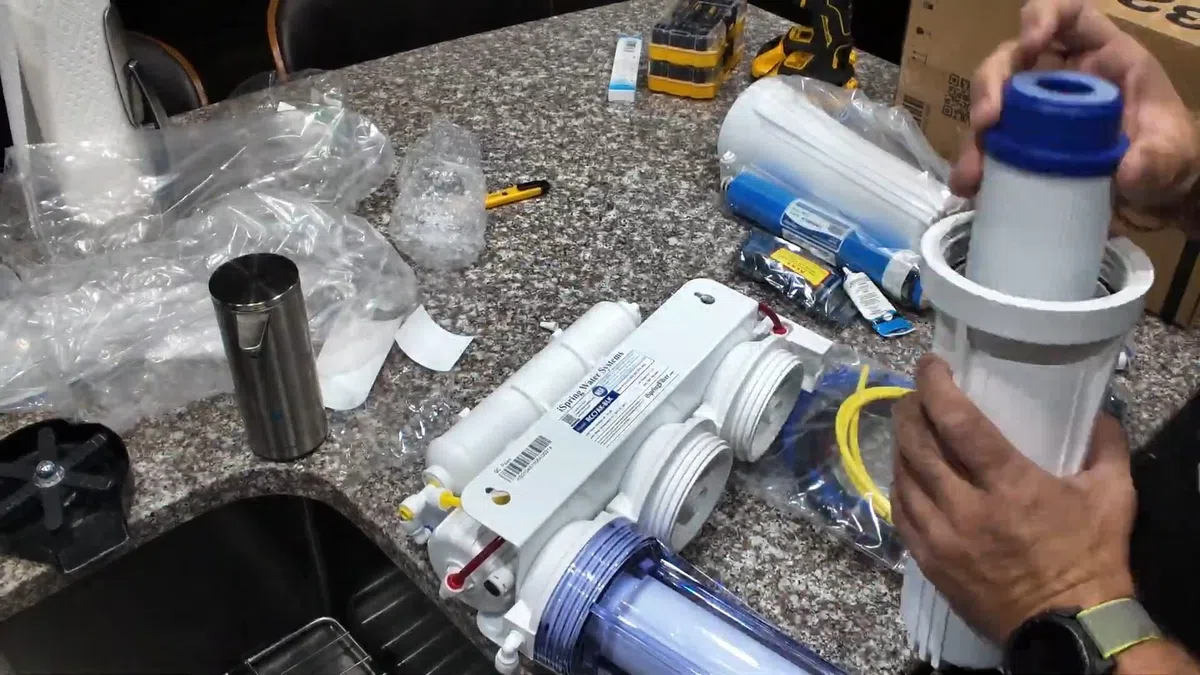
Water filtration for Goodyear's multi-utility water situation
Goodyear is served by four water utilities — City of Goodyear, EPCOR Water Arizona, Liberty Utilities, and Global Water Resources — each drawing from a different blend of CAP Colorado River water and local groundwater. All deliver water in the 250 to 400 ppm hardness range, which a whole-home softener addresses. But hardness is not the only water quality variable in this market. CAP water carries chloramines as the primary disinfection chemical, which gives treated water a characteristic taste and smell that many homeowners want to reduce. Some utilities blend groundwater that has higher TDS from dissolved minerals beyond calcium and magnesium. Sediment levels can vary seasonally, particularly in areas served by utilities drawing from surface water sources.
Whole-house filtration at the point of entry addresses these concerns for every fixture and appliance in the home. A sediment filter captures particles before they reach the softener resin bed or the household plumbing. A carbon filter reduces chloramines and organic compounds that affect taste and odor. These are different tools for different goals than the softener, and they work together rather than competing with it. In most Goodyear homes, a sediment pre-filter before the softener is the minimum practical filtration addition, and a carbon filter is a reasonable upgrade for homeowners concerned about chloramine taste in shower water and laundry.
Water filtration systems we install in Goodyear homes
Sediment pre-filtration
A sediment pre-filter installed at the point of entry captures particles and turbidity before water reaches the softener or any household plumbing. Standard residential sediment filters use 5-micron or 20-micron pleated cartridges that capture fine particles including sand, silt, rust from older distribution pipes, and sediment that enters the supply water during monsoon-related turbidity events. Protecting the softener resin bed from sediment fouling extends the resin's service life. Sediment filters require cartridge replacement every 3 to 6 months, and the flow restriction of a clogged filter is the primary indicator that replacement is overdue.
Activated carbon filtration
Whole-house carbon filters use activated carbon media to adsorb chlorine, chloramines, volatile organic compounds, and taste and odor-causing substances. For Goodyear homes on CAP water, which uses chloramines for disinfection, a carbon filter at the point of entry reduces the chloramine concentration in shower water, laundry water, and all drinking water outlets simultaneously. This is a broader benefit than point-of-use carbon at the kitchen sink alone. Carbon block filters provide finer filtration than granular carbon media and are the current standard for residential whole-house carbon systems.
Iron and sulfur filtration
Iron filtration is less commonly needed in Goodyear homes on municipal CAP water, which has low iron content. It is more relevant in areas where groundwater with elevated iron concentrations mixes into the supply, or in homes with well water as the source. Hydrogen sulfide, which produces a rotten egg odor, is addressed by oxidizing filters or aeration systems. We test for iron and sulfur when a homeowner reports orange staining on fixtures or a sulfur odor in the water before recommending iron-specific treatment rather than standard softening and carbon filtration.
Multi-stage whole-house systems
A point-of-entry system combining sediment, carbon, and softening in a staged installation addresses the full water quality profile for most Goodyear homes. The standard configuration places the sediment pre-filter first, followed by the carbon filter, followed by the softener. This order protects each subsequent stage from what the previous one removes: the sediment filter protects the carbon media from particle fouling, and both protect the softener resin from contaminants that reduce its effectiveness. We design the multi-stage configuration based on the specific water quality of your address and your utility's current source mix.
Service areas in the West Valley
We install whole-house water filtration systems in all Goodyear communities and surrounding West Valley cities: Palm Valley, Estrella Mountain Ranch, PebbleCreek, Avondale, Litchfield Park, and Surprise. Annual filter service and water quality testing available.
Frequently asked questions
Water filtration questions for Goodyear homes
What is the difference between water filtration and water softening?
Water softening addresses hardness — the calcium and magnesium content that causes scale, reduces soap effectiveness, and shortens appliance life. A water softener uses ion exchange to swap calcium and magnesium for sodium. Water filtration is a broader category that addresses different water quality parameters: sediment (particles), chlorine and chloramines (taste and odor, added by utilities), iron, hydrogen sulfide, and other specific contaminants. Some Goodyear homeowners benefit from both a softener and a whole-house filtration system upstream of the softener. Others need filtration for specific concerns that softening doesn't address. We assess the water and the goal before recommending a treatment path.
Do I need a whole-house filter if I already have a water softener?
It depends on your specific concerns. A softener alone addresses hardness effectively. If your concern is also the chloramine taste in CAP water, or if your utility has elevated sediment during certain seasons, or if you want protection for the softener resin bed from sediment fouling, a whole-house pre-filter upstream of the softener adds value. A sediment pre-filter at the point of entry is a low-cost addition that protects both the softener and all downstream appliances. A carbon pre-filter upstream of the softener also reduces chloramine that can slowly degrade the softener resin over time.
What does a carbon filter remove from Goodyear water?
Activated carbon filters remove chlorine, chloramines, volatile organic compounds, certain pesticides, and compounds that affect taste and odor. CAP Colorado River water carries chloramines as the standard disinfection chemical — more stable than free chlorine in long distribution systems. Chloramines give treated water a characteristic taste that carbon filtration largely eliminates. Carbon also removes some trihalomethanes and other disinfection byproduct compounds. It does not remove hardness minerals, nitrates, or heavy metals — those require different treatment technologies.
How often do whole-house water filters need replacement in Goodyear?
Sediment pre-filters in Goodyear homes typically need replacement every 3 to 6 months, depending on the sediment level in the supply water and the incoming water pressure. Monsoon season can temporarily increase sediment in some supply sources, which shortens filter life during those months. Whole-house carbon filters last 6 to 12 months depending on flow volume. Iron filters have media beds that need periodic regeneration with potassium permanganate or backwashing, depending on the filter type. We recommend an annual service visit to check filter condition, measure output quality, and replace media as needed.
What is point-of-entry versus point-of-use water filtration?
Point-of-entry filtration installs where the water main enters the home, treating all water that enters any fixture or appliance — showers, laundry, dishwasher, and all faucets. Point-of-use filtration treats water at a specific outlet, typically the kitchen sink or refrigerator dispenser. A whole-house carbon filter is point-of-entry; an under-sink RO system is point-of-use. Both have their appropriate applications. A whole-house carbon filter benefits showers (reduced chloramine exposure during a hot shower), laundry (chlorine reduction extends fabric life), and all drinking water outlets simultaneously. A point-of-use RO provides the highest quality treatment at the specific outlet where it matters most.
Schedule water filtration installation in Goodyear
Whole-house sediment and carbon filtration sized for your Goodyear utility. Free water quality assessment and system recommendation.
(623) 323-3182 — Call Now