Goodyear, AZ · Emergency Response · West Valley
Burst Pipe Repair in Goodyear, AZ
Burst pipes in Goodyear homes result from hard water corrosion, summer heat expansion, and UV degradation of outdoor fittings — not from freezing. Emergency and same-day repair for burst supply lines, hose bibs, and copper pipe failures across the West Valley.
Why pipes burst in Goodyear without freezing temperatures
Most discussions of burst pipes focus on frozen pipe scenarios that don't apply to the Arizona desert. In Goodyear and the West Valley, four conditions produce burst pipe failures regardless of the mild winters.
Hard water corrosion is the primary cause of interior supply line bursts. At 250 to 400 ppm from all four Goodyear water utilities, calcium and magnesium attack the interior of copper supply lines over years of service. The corrosion is most aggressive at changes in water velocity — fittings, elbows, transitions — and at slab level where oxygen content in the water differs from above-grade runs. A supply line that has been developing pinhole corrosion for 20 years can progress from a seep to a full burst, particularly under the higher pressure cycles that occur when a washing machine or irrigation system opens and closes valves rapidly.
Outdoor pipe bursts follow a different pattern. Goodyear's daily summer temperatures span from above 110 degrees during peak hours to the mid-80s at night — a daily range of 25 to 30 degrees that puts repeated thermal expansion and contraction stress on any exposed fitting or connection. Plastic components degrade faster: the combination of sustained UV radiation and thermal cycling makes plastic hose bibs, drip irrigation fittings, and backflow assembly components brittle over time, and they crack or fail at a fitting without dramatic warning.
Common burst pipe scenarios we repair in the West Valley
Copper supply line bursts above slab
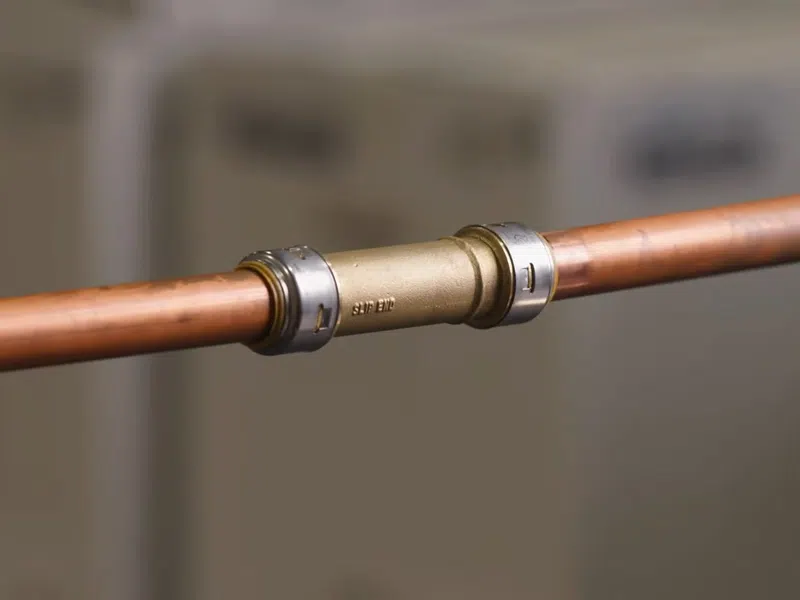
Above-slab copper supply line failures in walls and ceilings of Goodyear homes usually begin at fittings. An elbow, tee, or coupling that has corroded from the inside fails at the fitting body rather than the pipe itself. The repair involves locating the leak with acoustic or thermal detection, making the smallest wall access necessary, and replacing the fitting or the section of pipe around it. If the adjacent copper shows signs of widespread pinhole corrosion, we recommend replacing a longer section or assessing whether a partial or full repipe is the more practical answer.
Hose bib and outdoor faucet failures
Exterior hose bibs on Goodyear homes are among the most frequently burst connections we repair. UV exposure and daily thermal cycling make plastic hose bib bodies brittle within a few years, and copper hose bibs develop corrosion at the wall connection behind the siding or stucco. We replace burst hose bibs with quarter-turn ball-valve frost-free models that handle Arizona thermal cycling better than the older compression-style bibs. We also verify that the anti-siphon or backflow prevention at the hose bib meets current ADEQ irrigation requirements.
Washing machine supply line failures
Washing machine supply lines — both the hot and cold connections — are a common source of burst pipe emergencies. The older braided rubber supply lines used in many 1990s and 2000s Goodyear homes have a rated service life of 5 to 10 years that many homeowners are unaware of. A supply line that fails while the homeowner is away can empty the entire supply into the laundry room and adjacent areas. We replace failed supply lines and recommend stainless steel-braided lines or copper supply with angle stop valves on every washing machine connection.
Irrigation and main service line bursts
Goodyear's extensive residential irrigation systems use polyethylene tubing and PVC laterals that can develop bursts at fittings and at connection points to hose bibs and backflow assemblies. UV-degraded tubing is brittle enough to crack along the pipe body rather than just at fittings. Main water service line bursts — the supply between the meter and the home — produce high-volume water loss that is immediately visible as a wet area in the front yard or a flooded garage. We repair both irrigation bursts and main service line failures, and coordinate with the applicable Goodyear water utility as needed for meter-side issues.
After the burst pipe is repaired
Burst pipe repair stops the active water loss and restores supply to the home. Depending on how long the pipe was leaking before it was addressed, there may be water damage in walls, subflooring, or under-slab areas that requires drying and restoration. We repair the plumbing but do not handle water damage remediation. If the burst was significant or ran for any period without detection, we recommend contacting a water damage restoration company to assess moisture levels in adjacent materials before they are closed up.
We also document the pipe material and condition at the repair site. If we find that the burst occurred in a section of copper that shows widespread pinhole corrosion — not just at the fitting that failed — we advise on the appropriate scope of additional work. A single repair in a pipe run that has 20 additional corrosion sites is an incomplete solution, and we tell homeowners that clearly rather than just billing the repair and leaving.
Service areas across Goodyear and the West Valley
We repair burst pipes across all Goodyear communities and surrounding West Valley cities: Palm Valley, Estrella Mountain Ranch, PebbleCreek, Avondale, Litchfield Park, and Surprise. Emergency response available 24/7. Call us and we dispatch the nearest available licensed plumber.
Frequently asked questions
What causes pipes to burst in Goodyear if there are no freezing temperatures?
Four causes dominate in Goodyear and the West Valley. First, hard water corrosion: at 250 to 400 ppm, copper supply lines develop pinholes over years of service that eventually enlarge to a rupture point, particularly at fittings and slab-level supply lines. Second, thermal expansion: Goodyear's daily summer temperature swings between 110 degrees during the day and low 80s at night stress outdoor copper and plastic connections at joints. Third, UV degradation: outdoor plastic fittings — hose bibs, drip irrigation connections, backflow assembly components — become brittle from sustained UV exposure and crack. Fourth, water hammer: pressure surges from pump cycling or rapid valve closure.
How do I stop an active burst pipe before the plumber arrives?
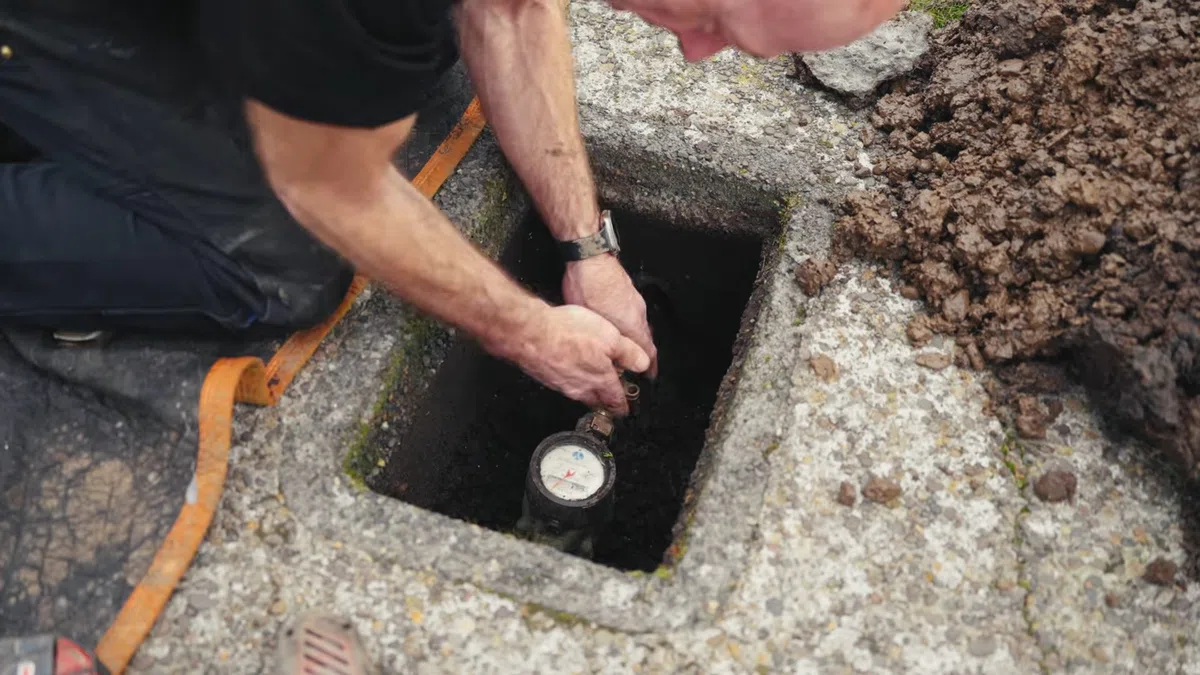
Locate and close the main water shutoff for your home. In most Goodyear master-planned homes, the main shutoff is either at the meter near the street, inside the garage where the service line enters the building, or at a valve in the garage utility area. Closing the main stops water from continuing to flow from the break. If the burst pipe is an outdoor hose bib or irrigation connection, there may also be a shutoff specific to that line. Once the water is off, call us. We will tell you when to expect arrival and what to do in the meantime.
Can a burst pipe be repaired at the break or does the whole section need replacement?
It depends on the pipe material, the location, and the extent of the damage. A single clean break in a copper supply line above slab can often be repaired with a coupling or a short replacement section at the break point. A break that results from widespread pipe deterioration — multiple pinholes on the same run, or a copper line that is visibly thinned from hard water corrosion — warrants replacing a longer section or considering a full whole-home repipe. We assess the pipe condition at the break and the surrounding section before recommending the scope of repair.
Does homeowner's insurance typically cover burst pipe damage in Arizona?
Most homeowner's policies cover sudden, accidental water damage from a burst pipe, meaning the damage to floors, walls, and personal property the water reached. The pipe repair itself is usually not covered as a maintenance item. Slow leak damage that accumulated over time before detection is often excluded as well. Arizona's CAP water situation has also prompted some insurers to add drought-related exclusions. Contact your carrier as soon as you identify the problem, and document the damage with photos before any drying or repair work begins.
What is the most common location for burst pipes in Goodyear homes?
The most common locations we respond to are hose bibs on the exterior of the home, washing machine supply line connections, and supply lines at slab level in homes with 15 to 30 year old copper. Hose bibs and outdoor faucets are exposed to extreme UV and daily thermal cycling. Washing machine supply lines — particularly the older rubber braided style — have a limited service life and fail without obvious warning. For slab-level bursts, see our slab leak detection page, as these require location work before any access.
Call for burst pipe repair in Goodyear
24/7 emergency response and same-day repair for burst pipes across the West Valley. Shut off your main and call us.
(623) 323-3182 — Call Now